
Five Patient Questions Driving Smarter Pharma Advertising
The most effective VG Health campaigns start with a simple principle: ask patients where they are in their journey.
When someone voluntarily shares information inside an ad experience, that response becomes declared intent. That intent reduces waste, improves efficiency, and drives real-world action.
Below are five strategic question frameworks we use most often. The wording typically varies by brand, but the objective remains the same: understand patient needs.
1. Identify Dissatisfaction to Unlock Switching Opportunity
Not all diagnosed patients are equal. Some are stable. Others are actively looking for change. Segmenting by satisfaction helps brands prioritize patients who are most likely to consider a new treatment.
Example question:
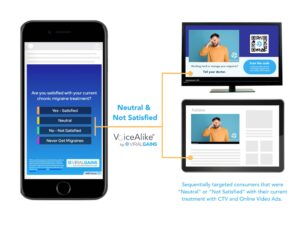
Are you satisfied with your chronic migraine treatment?
- Yes
- Neutral
- No
- I don’t have migraines
This approach isolates patients with unmet needs while filtering out non-relevant audiences. It often leads to stronger efficiency and higher-quality reach.
The Result:
One pharma client used this strategy over the course of a year and saw:
- 64% higher Audience Quality Score vs. partner average
- 67% decrease in cost per new patient
- 5x increase in new patient starts
2. Pinpoint the Stage of a Patient Journey in Real Time
Diagnosis alone does not tell the full story. Patients may be diagnosed but untreated. They may be symptomatic but undiagnosed. Each scenario requires different messaging.
Example question:

Have you or a loved one been diagnosed with EoE?
- Yes, diagnosed but not treating
- Yes, diagnosed and treating
- No, but have trouble swallowing
- No, but want to learn more about EoE
This structure captures the real-time journey stage as zero-party data. Brands can scale these signals with VoiceAlike® AI to align media activation with patient status.
The Result:
Cost Per Patient Reach was 35% lower than leading pharma data providers.
In other words, real patient input combined with VoiceAlike® AI delivered 35% lower cost to reach the right patients.
3. Confirm Condition Presence Before Optimizing
Healthcare campaigns often start wide. A simple qualifier can quickly separate declared patients from general audiences and sharpen performance mid-flight.
Example question:
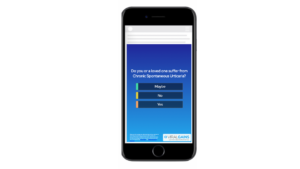
Do you or a loved one suffer from CSU?
- Yes
- No
- Maybe
This strategy strengthens audience quality and ensures optimization is grounded in confirmed relevance based on real human feedback.
The Result:
- Crossix Audience Quality Score was 1.6x higher than benchmark
- CTR was 42% higher and CPC was 30% more efficient than leading pharma data provider “CSU Sufferers” segment
4. Surface Severity and Unmet Need
Within a diagnosed population, severity matters. Identifying patients experiencing frequent flare-ups or ongoing symptoms reveals those who may need a different treatment approach.
Example question:
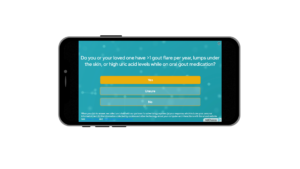
Do you or a loved one have more than one gout flare per year, lumps under the skin, or high uric acid levels while on an oral gout medication?
- Yes
- No
- Unsure
This level of nuance enables brands to concentrate investment where clinical need and intent are strongest.
The Result:
ViralGains used this strategy to deliver a 4.8x Crossix Audience Quality Score – more than 3x higher than the benchmark.
5. Understand Current Medication Behavior
Treatment choice provides powerful context. Knowing what patients are currently taking uncovers switching potential and competitive positioning opportunities.
Example question:

Which of the following medications do you take for chronic migraine?
- Brand A
- Brand B
- Brand C
- Brand D
- Brand E
The Result:
The brand uncovered valuable competitive insights about chronic migraine patients and their satisfaction with their current treatment.
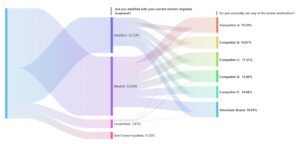
For example:
- 53% of respondents reported feeling neutral about their current treatment, highlighting an opportunity to educate and engage patients who may be open to switching.
- The advertiser’s brand and Competitor A were the most frequently used medications. However, both had high usage among patients who felt neutral, suggesting many users are on the fence about their current experience.
- Competitors B and C stood out, with a stronger share of usage among satisfied patients (44% and 36%, respectively) and little to no usage among unsatisfied ones – potentially signaling higher perceived effectiveness.
Why This Approach Works
Each of these strategies is built on a simple idea: patients will tell you what matters if you ask clearly and respectfully.
Declared signals fuel smarter AI modeling. They improve efficiency and drive increases in in-office visits and new patients. Most importantly, they connect media investment to real-world healthcare impact.
Better healthcare advertising does not start with louder messaging. It starts with better questions.